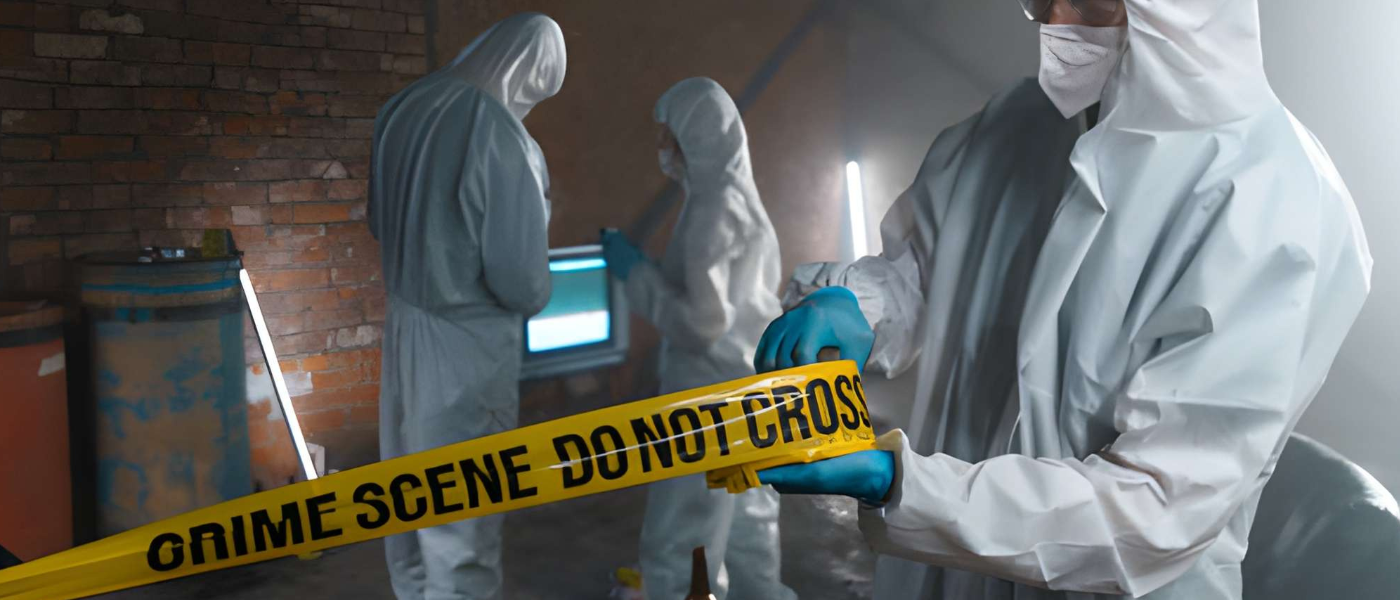
A career as a crime scene investigator (CSI) is suitable for those interested in law enforcement and forensic science. The role focuses on collecting, documenting, and analyzing physical evidence to support criminal investigations and legal proceedings. The education and training requirements of CSIs differ, depending on the state and agency. Nevertheless, there are general expectations and duties that you ought to know before pursuing this career.
Today, we are going to talk about the place of work of CSIs, their job descriptions, and the process of becoming one. Let’s get started.
Key Takeaways
- The Crime Scene Investigators have a significant role in the criminal justice process in collecting, documenting, and examining physical evidence in support of criminal investigations and trials.
- The work involves fieldwork activities in crime scenes as well as analysis in the lab, which can require long hours and working under pressure.
- CSIs are also faced with challenges such as emotional distress, harsh physical environments, the need for accuracy, and the preservation of evidence integrity.
- Having a bachelor’s degree in forensic science, criminal justice, or any similar field, along with experience and credentials, will help immensely in one’s professional endeavors.
- CSI job opportunities can be pursued along multiple lines and hold favorable employment prospects and compensation rates due to increasing demand for forensic services.
What Do Crime Scene Investigators (CSI) Do Everyday?
The daily work of a CSI depends on the type of crime and the agency they work for, so no two cases are the same. CSIs are responsible for identifying, preserving, and documenting evidence at crime scenes to assist law enforcement and forensic teams. Here is a gist of what their duties include:
- Keeping crime scene evidence safe
- Locating and marking crime scenes and areas of interest
- Sharing vital evidence with forensic scientists/working with them
- Documenting crime scenes by taking pictures and measurements
- Ensuring evidence is properly maintained with a chain of custody
- Preventing contamination or tampering with evidence
- Setting up, using, and ensuring the proper maintenance of laboratory equipment
Where Do CSIs Work?
The majority of CSIs work for law enforcement agencies such as local police departments, sheriff’s offices, and federal organizations like the FBI. A forensic investigator may work with state crime labs or private forensic laboratories, as well as a government agency that investigates environmental crimes, fraud, or national security crimes.
On the other hand, crime scene investigators spend a considerable amount of time at crime scenes, including both residential and commercial locations, as well as public and outdoor areas. The nature of their work often requires them to work long, irregular hours, since they must respond promptly to incidents at all times, regardless of the time or weather conditions. Apart from fieldwork, CSIs spend a lot of time in the laboratory as well, analyzing forensic instruments, DNA, blood samples, and digital data.
Researchers and academic institutions employ some CSIs to develop and test new forensic technologies, as well as to train future professionals. These technologies include DNA profiling and sequencing, advanced fingerprint analysis (AFIS), digital and mobile device forensics, 3D crime scene scanning and reconstruction, forensic toxicology techniques, and artificial intelligence assisted evidence analysis.
Other CSIs work as consultants, who testify as experts in law firms, private organizations, and courts. The nature of the work of CSIs is technical and investigative, which is why they need to be flexible, detail-oriented, and capable of working in high-pressure situations without compromising professionalism.
Top 5 Challenges CSIs Face on the Job
Talking about high-pressure situations, the job of CSIs is not easy at all. They face a range of challenges that test their technical skills and mental resilience, such as:
- Maintaining Evidence at Active Scenes
The crime scenes are usually messy. CSIs must ensure that evidence is not contaminated or damaged. It needs to be handled with care while working alongside police, medical staff, and civilians.
- Emotional and Psychological Stress
CSIs regularly encounter violent crimes, fatalities, and disturbing scenes. Managing emotional stress and maintaining professionalism over time can be challenging.
- Long Working Hours
Crimes can occur at any time. Therefore, CSIs must be available on call, working at night, weekends, and holidays, and sometimes long hours to help solve a crime.
- Maintaining Accuracy
It is essential that all the evidence related to crime must be collected and properly stored the first time. Errors may undermine investigations or court proceedings, and this puts a lot of pressure on CSIs.
- Physical and Environmental Requirements
CSIs work in harsh environments such as extreme weather, cramped areas, and dangerous environments, which may be physically challenging and dangerous.
Crime Scene Investigation Career Paths You Can Take
Crime scene investigation offers several career paths, allowing you to specialize based on your interests. Many professionals start in entry-level investigative roles and progress into CSI positions or other specialized areas over time. With the right training and experience, you can move into different roles within the field. Below are some career options available after gaining CSI experience:
- Crime Scene Photographer
- Forensic drawing artist
- Forensic Laboratory Specialist
- Private Investigator
- Fraud Examination Officer
How to Become a Crime Scene Investigator (CSI)
Is a career in crime scene investigation something you’re interested in? Then you will need to follow a few steps to get started.
Step 1: Get a Degree and Certification
The first step is to get the right education. Some crime scene investigator (CSI) roles do not require a degree, however, having a degree in forensic science, criminal justice, or criminology gives you a strong foundation.
These subjects help you understand how investigations work at a professional level. You also learn how to use forensic tools, follow legal procedures, and handle evidence properly. Evidence handling is one of the most important parts of a CSI’s job.
You can also consider certification programs instead of full 4-year degree programs related to CSIs that prepare you for professional roles in investigation and evidence analysis. Having a degree or certification can also increase your salary potential and make you stand out from other applicants.
Step 2: Get the right skills and qualifications
Once you start school, work on getting the personal and professional skills you need for this field. To work on real cases, you need to be able to communicate well, think critically, and stay calm under pressure. Some important skills are:
- Good communication and working together
- Thinking critically and analytically
- Paying attention to details
- Understanding of the law and morals
- Staying calm when things get tough
Some people also start out as police officers or in related jobs to get some experience in the field early on, but this isn’t required.
Step 3: Acquire Real-World Experience
Now time to put what you’ve learnt into practical experience. Seek out internships, positions as lab assistants, or entry-level positions in forensics or law enforcement. You get to experience:
- Photograph and document crime scenes
- Gather and keep the evidence
- Recognize weapons and fingerprints
- Collaborate on ongoing investigations with other investigators
To assist new CSIs in learning from seasoned professionals, numerous agencies also provide mentorship programs. For example:
- Federal Bureau of Investigation (FBI) Honors Internship Program: Paid summer internships where students assist with forensic support and investigative projects
- Bureau of Alcohol, Tobacco, Firearms and Explosives (ATF) Forensic Science Internships: Summer internships in forensic biology, chemistry, firearms, and latent prints
- Naval Criminal Investigative Service (NCIS) Internship Program: Provides field experience and mentorship with NCIS professionals
- Harris County Institute of Forensic Sciences (HCIFS) Internship Program – Offers mentoring in forensic disciplines including imaging, DNA, and crime lab work
Step 4: Apply for CSI Jobs
You can apply for CSI jobs in police departments, forensic labs, or private investigation units after completing your coursework and gaining experience. After being hired, continue to learn new things by attending workshops and receiving advanced forensic training.
Here is a list of jobs and roles you can apply to, along with their salary expectations.
Salaries for Crime Scene Investigator Careers
| Job Role | Salary Per Year |
| Crime Scene Investigator (CSI) | $70,578 |
| Forensic Crime Scene Investigator | $77,448 |
| Crime Scene Technician | $68,061 |
| Detective / Criminal Investigator | $91,610 |
| Forensic Science Technician | $63,220 |
| Forensic Specialist | $58,137 |
| Computer Forensic Analyst | $82,017 |
| Forensic DNA Analyst | $81,367 |
Is the CSI Industry Outlook Good?
Moreover, there is a wide range of job outlooks and salaries that can be earned depending on your educational background, experience, and where you live. BLS data shows that the median annual wage for forensic science technicians is $63,740. In 2022-2032, there will be an average of 2,300 job openings a year, with a growth rate of 13%. The BLS data does not distinguish CSIs from forensic scientists, however.
Compared to that, detectives and criminal investigators earn an annual median wage of $91,610. A person who lives in a metropolitan area usually makes more than a person who lives in a rural area. A criminal investigator in California makes $110,320 per year, while one in Texas makes $82,990.
Why Is Having a Crime Scene Investigation Degree Necessary?
To pursue a CSI career that involves lab work, you’ll need a bachelor’s degree. Specialized areas like fingerprint examination, toxicology, and digital forensics often require deeper technical training and lab practice. Gaining these advanced skills from a bachelor’s or master’s degree in crime scene investigation can help you qualify for higher-level positions and handle more complex cases effectively.
If you don’t have a degree, you’ll need to become a police officer to make your way up the career ladder. Some states allow applicants who have an associate’s degree to become CSIs, but it isn’t common. As an example, in North Carolina, certain law enforcement agencies can recruit evidence technician positions using an associate degree and experience, although most CSI jobs favor bachelor’s degrees. In Indiana, crime scene investigator responsibilities are certified as a law enforcement agent, which normally involves the completion of police academies, not a four-year degree.
CSI Skills You Can Gain From a Degree
- Evidence Collection and Preservation: Learning how to identify, collect, and store physical evidence without contamination.
- Attention to Detail: Developing the ability to notice small but critical details at crime scenes.
- Analytical and Critical Thinking: Interpreting evidence, identifying patterns, and supporting investigations with logical conclusions.
- Legal and Procedural Knowledge: Understanding laws, forensic protocols, and chain-of-custody requirements.
- Technical and Laboratory Skills: Gaining hands-on experience with forensic tools, documentation methods, and laboratory equipment.
Other Degrees That Can Lead to a CSI Career
A degree in forensic science or crime scene investigation is the best way to get ready for a career as a CSI. However, there are other degrees that can also help you get ready. For example:
- Criminal Justice and Law
A criminal justice degree gives you a full picture of the legal system, law enforcement, and how to stop crime. People who want to work in law enforcement or investigation often choose this path.
- Chemistry or Biology
If you want to work in forensics in a lab, getting a degree in biology or chemistry is very helpful. They teach you how to look at blood, DNA, and chemicals found at crime scenes, which is the first step towards understanding evidence at the molecular level.
- Psychology or Criminology
Studies in criminology investigate the causes of criminal activity as well as the social elements that influence crime. Psychology is also helpful, especially for people who work in suspect profiling or behavioral analysis.
- Cybersecurity or Computer Science
Degrees in cybersecurity or computer science lead to positions in digital forensics, where you’ll look into electronic evidence, online fraud, and data breaches as digital crimes increase in frequency.
- Legal Studies or Law
Understanding courtroom procedures, admissibility of evidence, and the legal nuances of investigations requires a legal background. Anyone working with crime scene evidence needs to be aware of this.
How to Progress in Your CSI Career
Crime scene investigators (CSIs) typically begin their careers as junior crime scene analysts, forensic technicians, or evidence collectors. Under the supervision of the senior investigators, the individuals focus on learning the fundamentals during these early stages, including documentation, photography, and evidence handling.
With more experience, they can also become a Senior CSI or Crime Scene Investigator, which entails managing crime scenes, educating new recruits, and communicating with forensic specialists and detectives.
Professionals have the opportunity to progress to a specialized role, such as forensic photographer, fingerprint examiner, or bloodstain pattern analyst, with more training and experience. Others can move on to supervisory roles such as Crime Scene Supervisor or Forensic Unit Manager, where they are in charge of whole investigation teams and make sure that the correct procedures are adhered to.
Others can also become Forensic Scientists, Consultants, or Expert Witnesses in a court of law with advanced qualifications.
Conclusion
CSIs are an important part of the justice system. They gather and analyze evidence, which helps in catching the perpetrator and bringing justice to the victim. To become a CSI, you need to have an understanding of forensic science, legal knowledge, as well as an analytical approach to gathering evidence and securing a crime scene. Getting a bachelor’s degree or a certification in a related program can help you gain these skills and prepare for an aspiring career in the criminal justice field.