

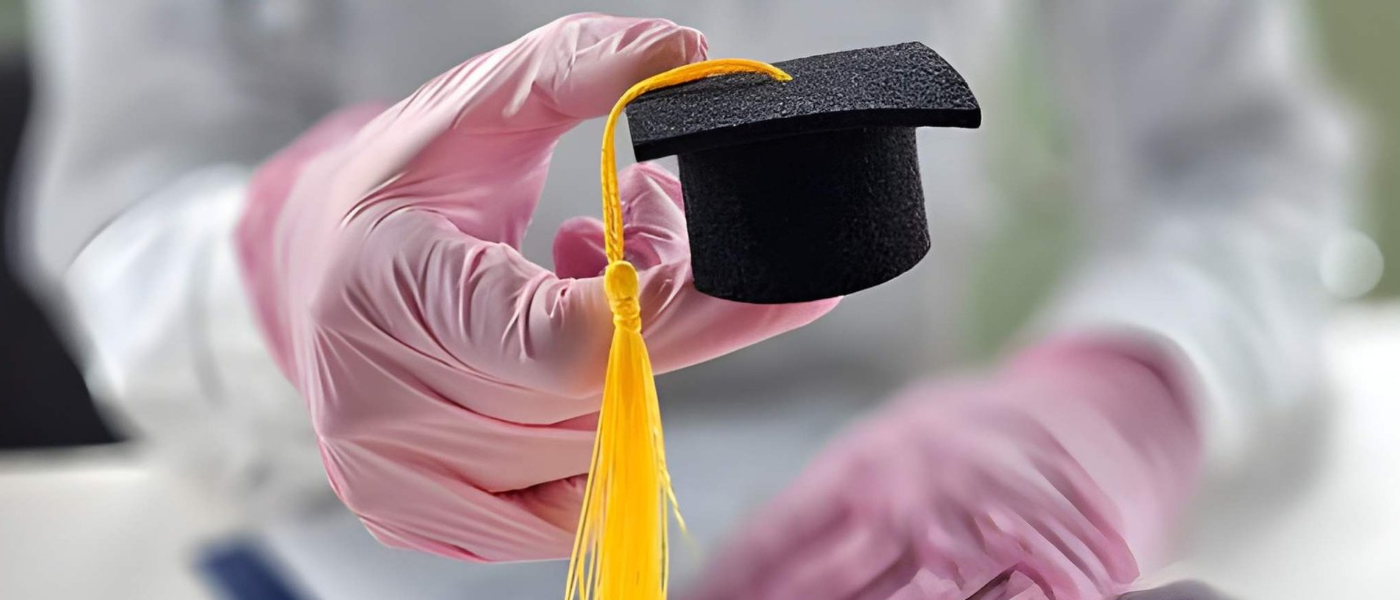
Forensic psychology is a part of psychology that connects mental health with the legal system. It is concerned with the way people think, behave, and make decisions in a situation that is related to crime, courts, prisons, investigations, and public safety.
The American Psychological Association explains that forensic psychology involves using psychology in legal and judicial settings. That may involve evaluations, care, professional viewpoints, studies, and assistance in legal proceedings.
Forensic psychology attracts many students as it is a combination of psychology, law, crime, and human behavior. It is also an emerging discipline. The US Bureau of Labor Statistics estimates that the number of psychologist jobs will increase by 6% between 2024 and 2034.
Nevertheless, not all degrees in forensic psychology result in the identical career. Others train you to work in support positions, others in research, counseling or work as a licensed psychologist. This guide will describe the primary degree paths, requirements, schedule, and how to select the appropriate program.
Key Takeaways
- Forensic psychology is the combination of psychology and the legal system; it deals with courts, crimes, prisons and investigations.
- You may join the field at various levels, such as Bachelor, Master, or Doctoral, and each level provides various opportunities.
- A doctoral degree (PhD or PsyD) is required to practice as a full-fledged forensic psychologist.
- It may take 8 to 15+ years to complete the entire process of college to license.
- You are able to study online at the Bachelor and Master level, however, you will be required to undergo the training hours in person.
- Research experience and contacting professors directly can help your application to grad school shine.
- The amount of your salary will be determined by your level of degree–entry level positions begin at approximately $45K and doctoral positions may go up to $95K or higher.
- Be sure to apply only to an APA-accredited program.
- Even after your doctorate, you will have to work under supervision and take a licensing exam to practice on your own.
- In addition to book knowledge, you must possess good people skills, emotional strength, and good ethical judgment to be successful in this field.
Understanding Forensic Psychology Degree Paths
There’s no single path into forensic psychology. Your starting point and how far you go depend on your goals, how much time you have, and what you can afford.
-
Bachelor Level
The majority of students begin with a Bachelor of Arts in Forensic Psychology, a combination of basic psychology with courses in criminology, sociology, and ethics. Others have a Bachelor of Science variant, which is more research-oriented, statistic-oriented, and brain science-oriented. Both may result in entry-level employment or assist you in joining grad school.
The most famous schools for forensic psychology bachelor degrees are:
- John Jay College of Criminal Justice;
- Marymount University; and
- Sam Houston State University
All of which incorporate criminal justice courses directly into the psychology curriculum.
-
Master’s Level
A masters degree will assist you in getting into more specialized and practical jobs. An MS (Master of Science) is more research and number oriented whereas an MA (Master of Arts) is more counseling and policy oriented. If you are already employed and cannot move, online masters in forensic psychology programs have increased significantly over the past few years.
Online divisions of schools such as
- Purdue University Global;
- National University; and
- Arizona State University is now fully remote.
-
Doctoral Level
If you want to work as a fully licensed forensic psychologist on your own, you need a doctoral degree. It can be of two kinds: the PhD, which is research-oriented and usually funded by teaching or research assistantships, and the PsyD, which is practice-oriented and typically self-funded.
A PhD would be more appropriate if you would like to teach or conduct research. A PsyD is preferable if you would like to conduct evaluations and work directly in courts and in correctional facilities.
- Drexel University;
- The University of Nebraska-Lincoln; and
- Simon Fraser University in Canada
They have some of the best doctorate programs in forensic psychology.
-
Certificates and Post-Graduate Options
If you are coming from another field, such as law enforcement, social work, or corrections, a post-graduate certificate in forensic psychology can provide you with the specialized knowledge you require without returning to school full-time. Such programs typically last six to eighteen months and include such aspects as psychological testing, risk analysis, and court testimony instructions.
What to Expect Before Applying to a Forensic Psychology Program?
Most applicants underestimate how much research experience matters. Even one semester assisting a professor on a study can significantly strengthen a graduate school application — admissions committees want to see that you can think like a researcher before you enter the program.
For example, Stanford’s psychology PhD admissions page says admitted students have often been involved in independent research as undergraduates or in post-baccalaureate roles, which shows how much research experience matters in competitive programs
Another commonly overlooked step is contacting faculty directly before applying. A short, professional email showing genuine familiarity with a professor’s published work can leave a lasting impression. Programs are not just evaluating grades and test scores; they are looking for students who already understand the field and show real initiative in pursuing it.
According to the APA’s graduate admissions guidance, strong applicant profiles typically demonstrate prior research involvement and a clear understanding of their target program’s faculty work, both of which go far beyond GPA alone.
Forensic Psychology Degree Requirements
Knowing the forensic psychology degree requirements before you apply will save you a lot of time and stress. Here’s what each level usually asks for:
Bachelor’s Programs Requirements
Admission to an undergraduate degree program in forensic psychology is not very hard. The majority of schools desire a high school GPA of approximately 2.5-3.0, test scores such as the SAT or ACT (but many schools do not require them anymore), and a brief personal statement as to why you would like to study the field. There are programs that recommend that you take introductory psychology or statistics in high school, as much as possible.
Graduate School (Doctoral and Master) Requirements
Graduate programs are much more competitive. A bachelor’s degree and a minimum 3.0 GPA (and most doctoral programs require 3.5 or higher) is generally required. You will also require recommendation letters from teachers or supervisors, a writing sample of your research or clinical skills.
It is required that you provide GRE test scores (but most schools are eliminating this) for doctoral programs in particular, one to two years of actual research or clinical experience prior to application is a significant difference.
Background Checks and Practicum Access
Most programs will not allow you into a placement before a criminal background check is done since forensic psychology students usually work in jails, hospitals, and courthouses. These checks can include a review of criminal history, pending charges, Social Security verification, sex offender registry records, and other exclusion lists, depending on the training site and its rules.
A prior conviction does not necessarily lock you out, but the program will consider a case-by-case basis. For instance, the University of Denver states that incoming students must complete background checks to work in practicum sites, including psychology clinics.
Skills Required for Forensic Psychology
Forensic psychology requires a certain level of skills that are not just in the training of psychology. The following is what you really require:
Analytical Thinking
You will analyse complicated case files, psychological test outcomes, and legal records – and make clear and evidence-based conclusions. Indecisive thinking does not stand in court.
Verbal and Written Communication
Your reports are read by judges, attorneys and juries. You must be able to explain psychological findings in a simple language without altering the evidence.
Emotional Resilience
You will be interacting on a regular basis with violent offenders, trauma survivors, and individuals in severe mental distress. It is not a decision to deal with your own emotional reaction, but a professional requirement.
Ethical Judgment
Forensic psychologists are under a lot of pressure by attorneys, courts, and institutions. You have to remain objective and adhere to APA standards even when findings are inconvenient to one party.
Psychological Assessment Skills
The job is premised on competency tests, risk assessment, and such tests as MMPI-2 or PCL-R. The ability to administer and interpret these correctly is a must.
Clinical Research
Forensic psychologists ought to know about the study of human behavior and mental health. This helps them to observe people with keen interest, record findings in a proper way and based on facts and not speculations. As psychology is constantly changing, they need to be informed about new research and studies as well.
Attention to Detail
It is a task in which an individual must consider minute details. A forensic psychologist listens to what an individual says, the way he or she acts and even the body language. Minor details, discrepancies, or strange responses can be very important in a case and it is very important to be observant.
Counselling Skills
Forensic psychologists may work with victims, children, offenders, or police officers who are traumatized, stressed, or experiencing mental health issues. Due to this, they require good counselling skills. They should be aware of how to talk, listen, and deal with sensitive issues with care and professionalism.
What Courses Do Forensic Psychology Colleges Offer?
College courses in forensic psychology typically combine psychology, law, criminal justice, and research. Students will be taught not only the theory of human behaviour but also the practical aspect of working in legal or correctional facilities.
The course structure in most of the programs is aimed at making the students have an understanding of crime, mental health, assessment, ethics and the real world practice of the profession. Programs in universities like Arizona State University and John Jay College of Criminal Justice are examples of this kind of training.
Abnormal Psychology
The course enables students to learn about the mental disorders, symptoms, diagnosis and how mental health conditions can be related to criminal behaviour or legal cases.
Criminology
Criminology is concerned with the reasons why crime occurs, the factors that influence criminal behaviour and how crime is researched in the society and the justice system.
Psychological Assessment
Students are taught the use of psychological tests, interviews and evaluation methods to assess behaviour, mental health, competency and risk in a forensic environment.
Ethics and Law
Legal standards, confidentiality, professional boundaries, and ethical issues are covered in this course in the context of working with courts, offenders, and mental health cases.
Practicum or Fieldwork Requirements
Most programs involve supervised fieldwork or practicum experience, in which students may observe or work in a setting such as courts, correctional facilities, hospitals, or community agencies.
Research Thesis Expectations
A thesis, capstone, or major research project is also required in some programs, particularly at graduate level, to assist students develop research and academic writing skills.
How Long Is a Forensic Psychology Degree?
The process may take four to seven years, depending on the education you complete and whether it is full or part-time study:
-
Undergraduate
Bachelor’s Degree — 4 Years
The majority of students complete in four years on a full-time basis. You may complete in 3-3.5 years in case you transfer credits or do an accelerated program. Part-time employment extends the schedule to 5-6 years.
-
Graduate
Master’s Degree — 2–3 Years
Full-time students usually finish in about two years. It may take three years, in case your program needs a thesis or a significant amount of fieldwork hours. There are online courses that allow ambitious students to complete within a short period of 18-24 months.
-
Doctoral
PhD or PsyD – 4-7 Years.
This is the most changeable stage. PhD programs take five to six years on average; mostly because of the dissertation. PsyD programs last four to five years. Every doctoral student must also have one year of supervised internship, typically following the completion of classes.
-
Post-Doctoral
Licensure Supervised Hours 1-2 Years.
Most states also demand 1,500-3,000 hours of supervised work experience after you have earned your doctorate before you can take the Examination for Professional Practice in Psychology (EPPP) and receive your license.
Online vs. On-Campus Forensic Psychology Degree Programs
The decision to pursue an online or an on-campus forensic psychology program is based on your schedule, budget, and career objectives. The format is important in this area since certain training can be in the form of research, internship or on-the-job training.
Online Psychology Forensic Programs
Students who require flexibility are a good choice of online programs. They are particularly handy with working professionals, parents or anybody who cannot move. Lectures and assignments can be done at home, usually at a more convenient time.
This format can be useful to forensic psychology students in theory-based courses, including criminal behavior, victimology, ethics, and psychology and law. Nevertheless, practicum or internship assignments might still be required to be fulfilled in-person, and online students might be less likely to access research, networking, and face-to-face mentoring.
Pros
- Work and family friendly
- Reduced commuting and relocation expenses
- Access to non-local programs
- Good in theory-intensive coursework
Cons
- Face-to-face practicum might be necessary
- Reduced direct faculty contact
- Less research and networking opportunities
Arizona State University has an online Master of Science in Forensic Psychology, which is provided by ASU Online. This program is a practical option because students learn mental health problems and human behavior in relation to crime and the U.S. legal system, which is why it is a good choice for students who prefer graduate-level training in forensic psychology in a flexible format.
On-Campus Forensic Psychology Programs
On-campus programs offer a more formal learning experience that includes direct classroom experience, easier access to professors and better campus-based research and internship services.
Pros
- More faculty and peer interaction
- Increased access to internships and campus resources
- Better research and networking possibilities
Cons
- Less flexibility
- Increased commuting or relocation expenses
Example: Seattle University has BA and BS degrees in Forensic Psychology, and students have an opportunity to prepare to work in the corrections, casework, and victim advocacy fields, as well as have access to internship and research opportunities related to criminal justice agencies.
How to Evaluate Any Forensic Psychology Program
When choosing a forensic psychology degree, it is important to look beyond the course name and check the overall quality of the program. Here are some important things to keep in mind:
Accreditation
Begin with accreditation checks. In the U.S., the APA accredits psychology master and doctoral programs in health service psychology, as well as internships and postdoctoral residencies. The broader quality of universities can be verified through recognised institutional accreditation databases. In the case of bachelor and most master degree forensic psychology programs, it is also important that the university itself be listed in a recognised accreditation directory such as CHEA.
Internship and Practicum Placement
A good forensic psychology program must provide the student with an opportunity to have a meaningful practicum or internship experience. This can be in the form of placements in courts, hospitals, correctional settings, forensic clinics or community mental health agencies.
An example is the MA in Forensic Psychology at the University of Denver, which states that its program includes a coursework and practicum experience that is focused on psychology and law.
Faculty Credentials
The quality of faculty is significant as it determines the quality of teaching as well as professional guidance. Find professors with good academic credentials, research, clinical or actual experience in a forensic context.
Clearly, the psychology department faculty page of John Jay displays faculty positions, research experience, and program leadership. This helps students determine whether the teaching team has the appropriate expertise.
Watch out against false career promises
When a program indicates it doesn’t directly help students in becoming a licensed forensic psychologist or explicitly stating why additional doctoral training and licensure is required, that is a significant warning sign.
Top Forensic Psychology Schools and Programs
College rankings change every year. Here are some notable college programs known for their forensic psychology degrees.
Notable Bachelor’s Programs
1.John Jay College of Criminal Justice (CUNY)
John Jay College is a well-known school in the US for criminal justice and forensic studies. Its forensic psychology program offers courses that combine psychology with law, crime, and the justice system. More importantly, students can also benefit from internship opportunities while studying here. They can get positions in courts, correctional settings, and public agencies within New York City.
- Program name: BA in Forensic Psychology – John Jay College
- Fees/tuition: $3,465 per semester for full-time New York State residents
2. Embry‑Riddle Aeronautical University
The BS in Forensic Psychology program by Embry‑Riddle Aeronautical University is one of the few programs in the nation that helps graduates apply psychological research and evidence-based practices to the legal field. After the program, they have the opportunity to pursue careers in psychology, legal systems, law enforcement agencies, government security agencies, aviation and so on.
- Program Name: BS in Forensic Psychology
- Fees/ Tuition: $44,000 for full-time undergraduate study
Master of Leadership Online
1. Purdue University Global
Purdue University Global offers a regionally accredited psychology master’s program with a forensic focus. The program is an affordable option for those who are tight on budget. Plus its online format makes it the best option for those who work daily jobs and can’t afford to leave their homes.
- Program name: MS in Psychology (Forensic Psychology concentration) – Purdue University Global
- Fees / tuition: Purdue Global lists $420 per quarter credit hour for master’s programs
2. Marymount University
Marymount University offers a specialized forensic and legal psychology program with courses related to law, public policy, and justice-related careers. More importantly, its location near Washington, D.C. gives students direct access to work in federal agencies.
- Program name: MA in Forensic and Legal Psychology – Marymount University
- Fees / tuition: $1,407 per credit for the MA in Forensic and Legal Psychology
Top Doctoral Programs
-
Drexel University
Drexel University offers an APA approved PhD in Clinical Psychology that prperaes graduates in the scientist-practitioner model, while focusing on clinical research. Students have the option to elect one of three major areas of study: Clinical Child Psychology, Forensic Psychology, and Health Psychology.
- Program name: PhD in Clinical Psychology (Forensic Psychology track)
- Fees / tuition: $1,525 per credit hour
2. University of Nebraska–Lincoln
The University of Nebraska–Lincoln is home to one of the most recognised law-psychology programs in the country. It is especially notable for students interested in studying the overlap between psychology and legal systems. It also offers a joint-degree pathway for advanced study.
- Program name: Law-Psychology Program – University of Nebraska–Lincoln
- Fees / tuition: $1,170 per credit hour
3. Widener University
Widener University also has an APA-accredited doctorate in clinical psychology with forensic relevance. This is very helpful for students who are more interested in clinical practice than in pure research.
- Program name: PsyD in Clinical Psychology – Widener University
- Fees / tuition: Tuition at $1,240 per credit, and for the first-year full-time doctoral cohort it lists $21,852 per semester / $43,704 annually
Career Paths and Licensing After Your Forensic Psychology Degree
Here are the top career paths for psychology degree holders:
| Job Title | Degree Level | Median Annual Pay |
| Probation Officer / Correctional Treatment Specialist | Bachelor’s | $64,520 |
| Social and Human Service Assistant | Bachelor’s | $45,120 |
| Forensics manager | Bachelor’s | $74,152 |
| Correctional Officer / Bailiff | Bachelor’s | $57,950 |
| Forensic analyst | Bachelor’s | $126,866 |
| Mental Health Counselor | Master’s | $59,190 |
| Substance Abuse / Behavioral Disorder Counselor | Master’s | $59,190 |
| Psychology associate | Master’s | $65,318 |
| Clinical and Counseling Psychologist | Doctorate | $95,830 |
| Professor | Doctorate | $61,014 |
Forensic Psychology Licensing Steps in the US
To become an independent psychologist in the US you typically need a doctoral degree plus state licensure steps. Here are some important things to keep in mind:
- If you want to be a licensed forensic psychologist, you should plan on a doctorate. Most states have licensure requirements to use the title of psychologist and psychologists generally must have an advanced degree; ASPPB indicates that clinical, counseling, and school psychology licensure requires a doctoral degree.
- Check accredited programs initially. Check the APA accreditation search to confirm the doctoral programs, internships, and postdoctoral options.
- Expect supervised training. ASPPB outlines the typical progression as academic program, internship, postdoctoral experience, testing, and finally licensure.
- Pass the EPPP. ASPPB indicates that all 66 member jurisdictions must have a passing score on EPPP Part 1, and some also on Part 2.
- Look into the specific regulations of your state. Check with the state board directly, as supervised hours, jurisprudence exams, and oral exams differ by jurisdiction, using ASPPB PSY|Book.
- Follow forensic ethics standards. The most obvious reference point of objectivity, competence, assessment, and testimony is the APA Specialty Guidelines of Forensic Psychology.
Tips for Succeeding in Forensic Psychology Programs
Doing well in a forensic psychology program takes more than just passing classes. Here are some important tips to keep in mind:
Gain Research Experience
Experience in research can enhance your profile significantly. Especially when you want to apply to graduate school in the future. A minor position in a university lab can help you a lot. Like you can learn how to handle information, analyze evidence, and think more critically about psychological issues.
The APA guidelines also indicate that graduate programs closely examine experience, and not grades alone.
Understand How the Legal System Works
Forensic psychology is a field that lies between psychology and law, and it is therefore useful to understand how the legal aspect of life functions. Visiting court hearings in a courtroom, visiting legal environments, or talking to legal practitioners can provide you with a better idea of how cases proceed through the US Legal system. This usually simplifies classroom learning to a great extent.
The US Courts says most courtroom proceedings are open to the public, which makes court observation a practical learning step.
Take Care in Selecting Placements
All practicums or placements do not provide the same experience. Attempt to select supervised positions where you can develop skills that are more directly related to forensic psychology. Such as assessment, report writing, or work directly related to courts, corrections, or legal environments.
Join Professional Organisations
Becoming a member of a professional organisation may help you in keeping in touch and informed about latest news related to crimes, court proceedings etc. The American Psychology-Law Society (AP-LS) provides student membership, networking, newsletters, access to conferences, and other resources to people interested in psychology and law.
It is also a guide to graduate programs in legal and forensic psychology which can come in handy when you are planning your next step.
Conclusion
Forensic psychology is not a profession that you fall into but rather a profession that requires actual planning and dedication, one degree at a time. You begin with a bachelor’s degree that introduces you to the fundamentals of psychology and criminal justice, progress to a masters degree that develops practical skills, and (assuming complete autonomy) complete with a doctorate, internship and supervised post-doctoral hours.
Yes, the way is long. However, the payoff is a profession in which your efforts are really needed; one in which you are assisting the legal system to make more informed decisions regarding the lives of real people.
Take time to assess programs and make wise decisions. Use the APA’s tools, especially the accreditation program search, to find a suitable program.
Search APA-Accredited Programs
FAQs
Can you become a licensed forensic psychologist with only a master’s degree?
Usually, no. In the U.S., independent psychologist licensure generally requires a doctoral degree, and ASPPB says all 66 member jurisdictions require a passing score on EPPP Part 1 before licensure.
Is forensic psychology only about working in court?
Court work is not the only aspect of the field of forensic psychology. According to APA, forensic psychology also relates to assessment, ethics, work related to treatment, correctional facilities and other legal or judicial services.
How competitive are doctoral psychology programs?
They can be very competitive, especially for research-focused PhD programs. Ratios of 300 applicants to 8 positions are common; some who are accepted decide to go elsewhere, or enter a different kind of graduate or professional program.
Do forensic psychologists only work with offenders?
No. They may also work with victims, witnesses, families, attorneys, courts, hospitals, and public safety agencies. That is why strong communication, ethics, and careful assessment skills matter so much in this field.
Why is memory such a big issue in forensic psychology?
Having a good memory is very important in a forensic psychology program. Memory can affect witness statements, interviews, and legal decisions. As psychologist Elizabeth Loftus said, our memories “may not be as reliable as we think,” which is why forensic work depends on careful interviewing and evidence-based evaluation.


